Tag: AI

AI in physical security: Where to start and what actually works

The conversation around AI in physical security has shifted. Two years ago, it was hype, pilot programs, and vendor promises. Today, enterprise security teams are deploying AI in production across access control, video surveillance, and incident management, and the gap between early adopters and everyone else is widening fast.

But for many security leaders, the question isn’t whether AI works. It’s where to start, what to realistically expect, and how to avoid the mistakes that derail implementation before it ever gets off the ground.

How are people using AI in physical security today?

AI in physical security is no longer experimental. Modern video analytics can distinguish between a person, a vehicle, and an animal with meaningful accuracy, which is a far cry from the motion-triggered false alarm machines that gave earlier-generation systems a bad reputation.

The market is also moving quickly. Major players in the security software space are embedding AI natively into their technology, which means buyers increasingly get AI as a feature rather than an additional product.

That said, integrating AI is the biggest challenge. Connecting modern AI tools to legacy physical security infrastructure can be tough because those legacy systems weren’t built to “play nice” with other systems. 

One thing hasn’t changed in the last few years: human oversight remains essential. The best implementations today keep humans in the decision loop while AI handles volume and pattern recognition.

What does AI actually do well for physical security?

Across security programs, AI is delivering real, measurable value in four areas:

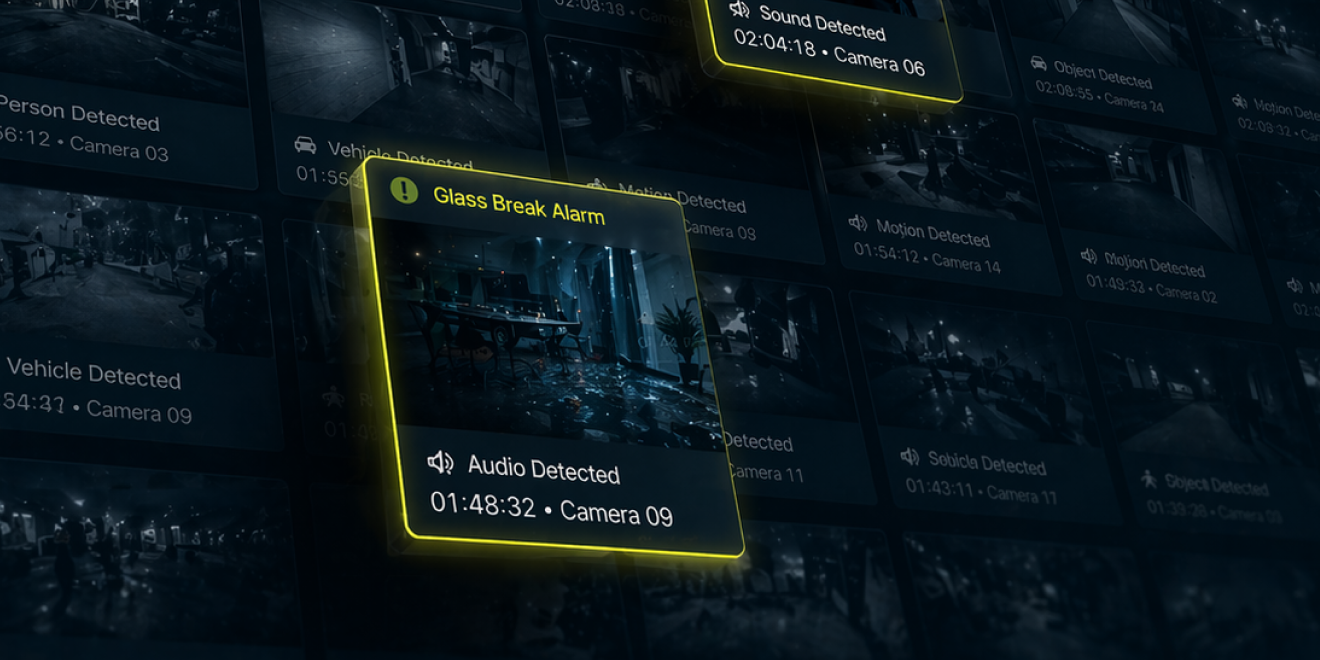
Automated alert triage is where most teams see the fastest ROI. AI filters false alarms from real threats, prioritizes alarms by risk context, and dramatically reduces the manual review burden on operators (often reducing it by 60 to 80%).

Intelligent video moves beyond single-camera monitoring. Cross-camera object tracking, behavioral anomaly detection, and automatic incident timeline reconstruction give operators and investigators tools that used to require hours of manual footage review.

Device health & maintenance is a great place to gain huge value but is often overlooked by security programs. AI can give you device health in real time and predict failures before they cause coverage gaps. Security operations can get a view of the status of every sensor, camera, and access point, with automatic alerts when devices go offline or degrade. This is something really difficult for humans to monitor manually and it’s a great way to ensure you’re getting the most from integrator contracts.

Where is the best place to start using AI? 

The smartest security teams don’t try to automate everything at once. They start by trying to solve one problem or paint point at a time.

For most organizations, the starting point is to reduce alarm fatigue and manage false alarms. It’s where AI can show measurable results quickly without requiring a full system and technology overhaul.

Once you’ve been able to show success, you can build on that. Start with a second use case, and again measure what actually happened. Share the results, even the ugly ones, as it indicates you’re learning. Through this process, AI will earn the trust of the team. And from there, you can expand further.

A practical 90-day framework looks like this:

  • Spend the first two weeks understanding the types of alarms you’re getting, and how many per month. Use this to decide which type of alarm volume you’ll try to reduce first. 
  • Use weeks three and four to select one focused use case, or alarm to manage with AI, and research AI technologies. Vendors with genuine security domain expertise are recommended. 
  • Deploy AI for the single use case during weeks five thru nine. Determine what your success goals are before go-live. For example if you’re targeting false DHO alarm reduction, set a specific benchmark: A 30% decrease in false alarms. 
  • Spend weeks 10-12 fine tuning the outcomes. Keep track of metrics and present results to leadership.

What success with AI looks like

The financial savings impact AI can offer is compelling. Lower cost-per-incident can be achieved through automation: often SOCs see reduced guard costs, fewer emergency dispatch calls, and operators who are paid to only handle true incidents (not click buttons to resolve false alarms). Many companies are also seeing reduced insurance premiums tied to these improved risk controls. These financial savings are board-reportable outcomes alongside improvements in the usually-tracked metrics like TTR, false alarm rate, system uptime. All of which translate monies spent in security into business language.

The mistakes that derail it

Most AI implementations don’t fail because of the technology. They fail in the execution and use. The most common pitfalls include trying to automate too much too fast and skipping change management with SOC operators. Partnering with IT can make or break the improvements, as AI requires a feedback loop to make sure the AI model is getting better and better at understanding the specifics about your program and your SOPs. And finally, many security leaders misunderstand how complex integration can be; it’s critical to the success, but many vendors do not offer an easy way to integrate across systems like ACS and VMS.

Starting small and showing wins generates trust from leadership, from operators, and from the organization. It’s good program management and you can do it, regardless of your experience with AI.

Ready to learn more about how to begin implementing AI in your security program? Let’s chat. 

Reducing Noise the Right Way

“Noise” in a global security operations center (GSOC) refers to the numerous alarms coming in for operators to analyze and address. Amongst this “noise” are legitimate security alerts that need to be addressed immediately, crowded by completely false alarms triggered by faulty sensors, environmental factors (wind, rain, animals), and user error. When left unaddressed this noise problem can result in system overload, compromised security, high operator turnover, and complacency. 

Security Doesn’t Scale!

Security doesn’t scale!   

Now before you get offended and stop reading, consider where we are as an industry today and how much we’ve evolved over the past 5, 10, 15, 50 years. Sure, there has been great innovation across certain products:

  • Camera resolution is higher than ever, at a price point that security leaders probably couldn’t have fathomed fifteen years ago. Today, cameras are essentially IP computers that perform advanced edge processing and analytics. 
  • Analytics have progressed from being a buzzword thrown around to actually delivering on many of its promises.
  • Organizations are continuing to replace their analog camera fleets with new IP technology, albeit at an alarmingly slow rate.
  • Facial recognition, object detection & classification, biometrics, drones, counter-drone, access control, tailgate detection, weapon detection, gunshot detection, aggression detection…and the list goes on. 

Yet, with all the amazing product and technological innovation our industry has seen, we haven’t resolved a core problem. Security doesn’t scale.

The Top 3 Benefits of Utilizing Machine Learning in Security

Machine Learning (ML) should not be confused or used interchangeably with AI (Artificial Intelligence). ML is a subcategory of AI that uses algorithms to recognize patterns from data and automatically learn insights, allowing programs to become more intelligent.

ML ultimately should aim to remove the need for humans to do repetitive, low-value decision-making activities, like triaging false positives or system/device health ticketing.

How Technology Addresses Worker Shortages in Security

It’s clear that despite recent layoffs in the tech industry and general unease about the economy, there are still significant gaps in the number of jobs available and the amount of workers available to fill them. According to the Labor Department, there are 5.5 million more job openings than workers available. The physical security industry is not immune to these shortages. 

Last fall, Allied Universal reported being unable to fill thousands of open roles nationally while other smaller security-related companies also cited difficulties finding workers to fill open roles. Reported instances of burnout among security professionals is contributing to this. In one report, 84% of security pros and 80% of other workers felt burned out. The same report claims that burnout can lead to missteps and employees experiencing burnout were three times as likely to think that security rules and policies “aren’t worth the hassle,” compared to respondents who were not experiencing burnout. 

As security leaders look to address some of these concerns for long-term gain, there’s a new discussion to be had: Can technology bridge the gap between worker shortages and the need for robust physical security programs? Implementing technology that streamlines decision-making is one way to try and address retention within a physical security department, but technology in general may contribute to solving this issue. 

The Role of Virtualized GSOCs
Mature businesses rely on a Global Security Operations Center, or GSOC, to collect and analyze information about threats to the organization, its people, and its assets. But the resources required to properly staff and maintain a GSOC are beyond the reach of many businesses, including startups. 

This presents a challenge: the world is simultaneously more connected and dispersed than it’s ever been, which makes managing physical security risks more critical – and more difficult – than ever before. Add in the challenge of sourcing talent for these operator and analyst positions, and many businesses might not be able to stand up a GSOC that can adequately serve the organization. 

Enter: Virtual GSOCs (vGSOCs). 

Many established enterprises rely on a physical GSOC to serve as the command and control center for their security programs. These secure locations are where threats are identified and analyzed and the appropriate response is determined. A vGSOC performs the same functions without the need for a centralized physical location, which saves money, enables scalability, is inherently more redundant, and gets the security program up and running more quickly than bringing a physical GSOC online. 

vGSOCs can also help organizations address worker shortages and staffing challenges by outsourcing the physical security function and providing additional support that may not have been available previously.

Promoting More Remote Work Options 
We’re entering a period of remote work-centric operations, with a recent report by Ladders stating that nearly 25% of all professional jobs in North America will be remote by the end of 2022. This means that remote work is here to stay – and it may be contributing to the worker shortage when remote work is not an option within an organization. 

As such, technology contributes to enabling more remote work functionality. Organizations who want to retain workers by promoting remote and hybrid work options have to plan long-term investments in IT infrastructure that support these workers, account for security threats – both physical and cyber – and foster a support environment that embraces remote workers. 

Addressing More False Alarms
In physical security, security leaders are tasked with making decisions in a split second using information that they have at their fingertips – and receiving hundreds of alarms each day can quickly lead to burnout and increased risk of missing a true security event. The “noise” generated by disparate systems within a GSOC, funneled through security guards and analysts to assess and respond to can become debilitating. In some regards, the various systems within the GSOC – from access control, video feeds, analytics alerts, intrusion and fire alarms, Dark Web monitoring, and much more – can create so much of this noise that the actual event might be missed. 

Operators cannot digest all of these false alarms and noise long-term without experiencing the kind of burnout mentioned earlier. For many organizations to handle the amount of alarms coming in at any given point, leaders have to either add more bodies or implement technology to address these challenges. And as we’ve mentioned, shortages are plaguing even the largest companies. 

The good news is that we’re in a period of time where there are many available technologies that implement artificial intelligence (AI) to help address this noise and reduce the number of false alarms there are. It’s critical that physical security leaders start identifying and implementing technology to help retain their operator talent and build a scalable program for protecting people and assets.  

The Case for Advanced Technology
In a recent webinar, Travis May from Groove Jones said that having technology that’s innovative helps keep security operators working in GSOCs engaged. With the technical advancements in not only supporting remote and hybrid workers, but also opening up the option for security operators to work virtually, physical security is taking a step forward in modernizing its approach to building the modern workforce.