Category: Industry Expertise

AI in physical security: Where to start and what actually works

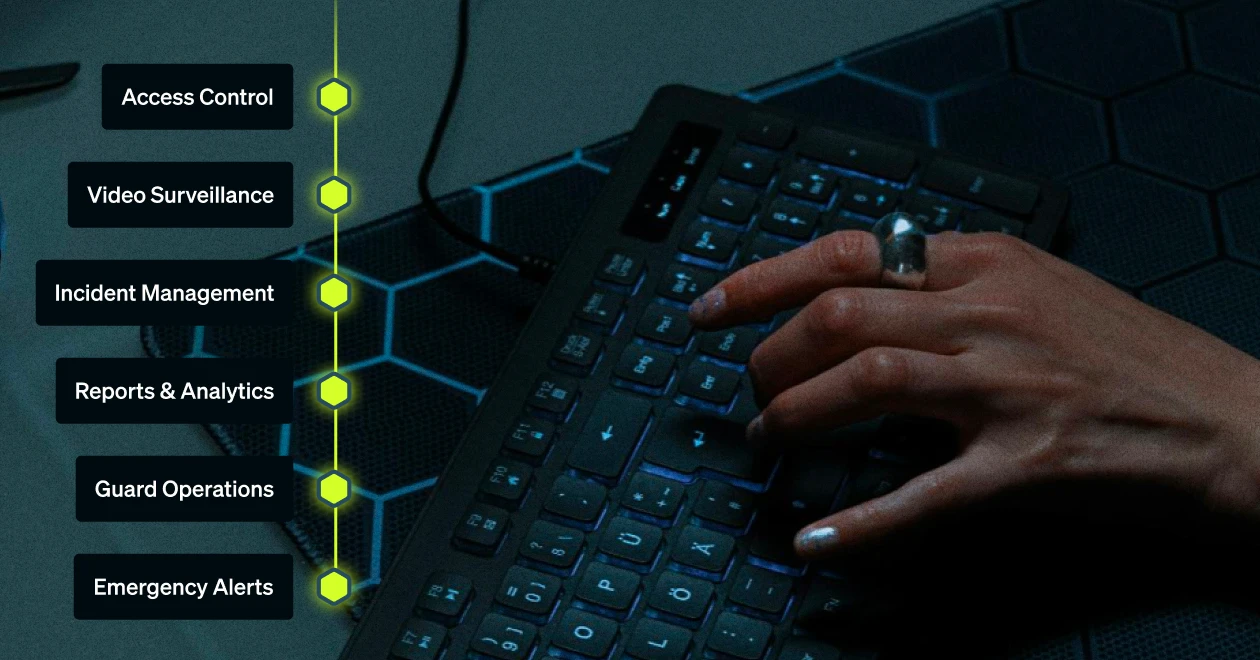
The conversation around AI in physical security has shifted. A few years ago, it was all hype, pilot programs, and vendor promises. Today, enterprise security teams are deploying AI in production across access control, video surveillance, and incident management, and the gap between early adopters and everyone else is widening fast.

But for many security leaders, the question isn’t whether AI works. It’s where to start, what to realistically expect, and how to avoid the mistakes that derail implementation before it ever gets off the ground.

The state of AI in physical security today

AI in physical security is no longer experimental. Modern video analytics can distinguish between a person, a vehicle, and an animal with meaningful accuracy, which is a far cry from the motion-triggered false alarm machines that gave earlier-generation systems a bad reputation.

The market is also consolidating quickly. Major players in the security software space are embedding AI natively into their ecosystems, which means buyers increasingly get AI as a feature rather than a bolt-on product requiring yet another integration headache.

That said, integration remains the central challenge. The biggest barrier isn’t AI capability, it’s connecting modern AI tools to every physical security system in place at an organization.  Legacy systems were never built with data interoperability in mind, which is necessary to make AI truly helpful.

And one thing hasn’t changed: human oversight remains essential. The best implementations today keep humans in the decision loop while AI handles volume and pattern recognition.

What does AI actually do well for physical security?

Across security programs, AI is delivering real, measurable value in four areas:

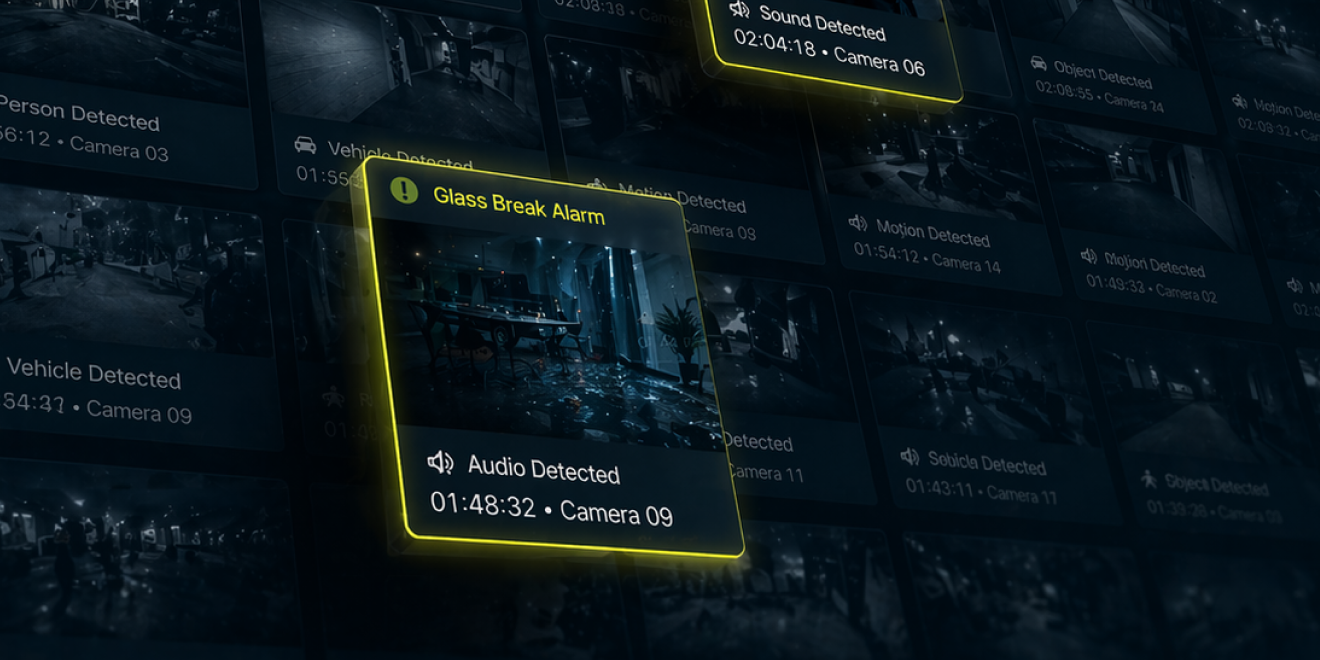
Automated alert triage is where most teams see the fastest ROI. AI filters false alarms from real threats, prioritizes by risk context, and dramatically reduces the manual review burden on analysts (often reducing it by 60 to 80%).

Intelligent video correlation moves beyond single-camera monitoring. Cross-camera object tracking, behavioral anomaly detection, and automatic event timeline reconstruction give investigators tools that used to require hours of manual footage review.

Predictive maintenance is underutilized but high-value. AI can offer details about device health in real time, predict failures before they cause coverage gaps, and help teams prioritize maintenance resources where they’re needed most.

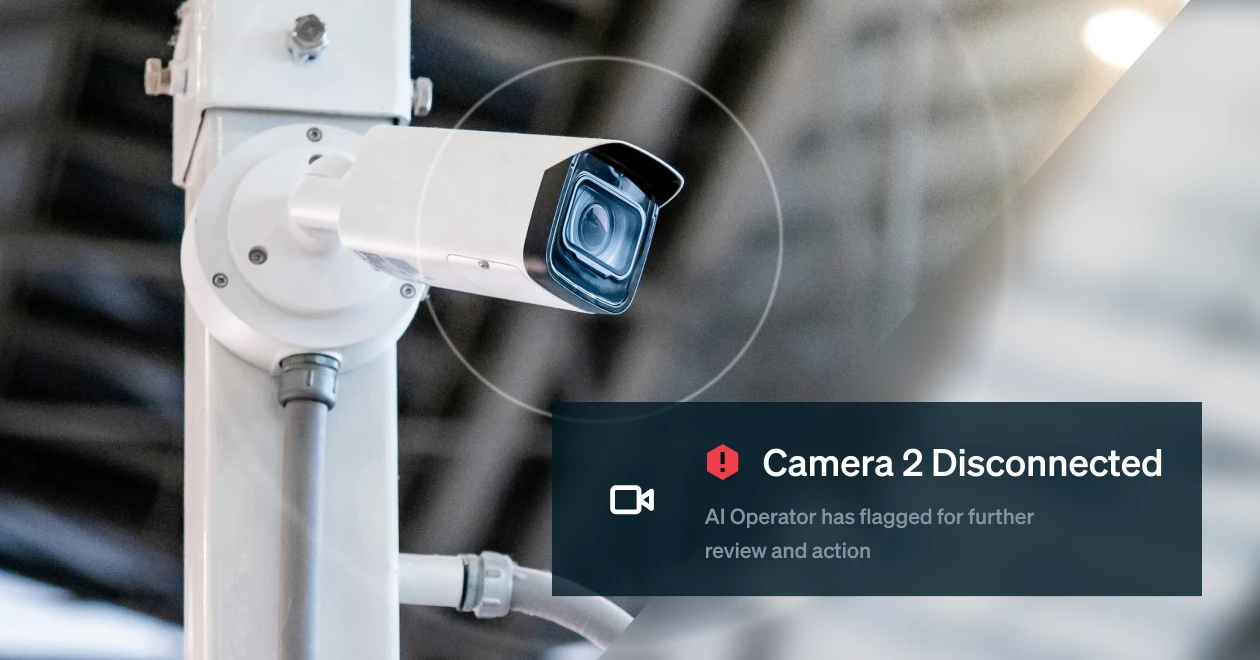
Real-time device health monitoring gives security operations visibility into the status of every sensor, camera, and access point, with automatic alerts when devices go offline or degrade, at a scale no human team can match manually.

Where is the best place to start using AI? 

The smartest security teams don’t try to automate everything at once. They start where the pain is loudest.

For most organizations, that’s alert fatigue and false alarm management. It’s the highest-friction, highest-ROI entry point, and it’s where AI can show measurable results quickly without requiring a full infrastructure overhaul.

From there, the approach is repeated for the next pain point. Deploy for one challenge at a time (or one piece of one challenge), measure rigorously, and report results transparently before expanding scope. AI’s role should expand as trust is earned (not as a condition of the initial business case).

A practical 90-day framework looks like this:

  • Weeks 1-2: Audit alert volume and map pain points with operators and analysts. 
  • Weeks 3-4: Select one focused pain point to address, and identify a vendor with genuine physical security domain expertise. 
  • Weeks 5-10: Deploy with a limited number of operators to understand how it works, and establish what performance indicators should be before rolling out to the whole team.
  • Weeks 11-12: Tune and optimize the system as operators and analysts use it, prepare and present results to leadership with a clear ROI statement.

What success with AI looks like

The top AI use in physical security isn’t just an operations story, it’s a business story.

Operationally, teams that implement AI well see analysts shift from reactive triage to proactive management. They see real incidents surface faster with less busywork to find them. And device uptime improve as failures become predictable rather than surprising.

The bottom-line impact is equally interesting and should be talked about. Lower cost-per-incident through automated responses, fewer emergency dispatch calls, reduced insurance premiums tied to improved risk controls, and operator reallocation from reactive work to strategic program management. These are board-reportable outcomes (MTTR, false alarm rate, system uptime) that translate security investment into business language.

The mistakes that derail it

Most AI implementations don’t fail in the technology. They fail in the execution. The most common pitfalls include trying to automate too much too fast, skipping change management with frontline operators, launching without a feedback loop to keep models calibrated, and underestimating integration complexity after a vendor promises plug-and-play simplicity.

The teams that win declare success on a narrow scope before expanding. Small wins generate the trust from leadership, from analysts, and from the organization that can fund and sustain the next phase.

That’s not a limitation of AI. That’s just good program management.

Ready to learn more about how to begin implementing AI in your security program? Let’s chat. 

How to Talk Threat Intel to Your C-Suite (Without Losing Them)

Security leaders know the drill: You’ve got critical threat data, limited resources, and an executive team that needs to understand why it all matters fast. But bridging the gap between operational security and boardroom priorities? That’s where things get tricky.

We recently sat down with Ryan Schonfeld (HiveWatch), Cory Siskind (Base Operations), and Bill Schieder (Labcorp) to talk about what actually works when you’re trying to get executive buy-in for security initiatives.

Start with the 10K, Not the Product Demo

Billr’s advice is refreshingly simple: Figure out your problem before you go shopping for solutions.

“Look at your company’s 10K report,” he said. “Identify the risks that your security organization can mitigate, and use that as the foundation for building your business cases.”

That 10K isn’t just a compliance document; it’s a cheat sheet for what your leadership already considers material risks. When your security pitch ties directly to those documented concerns, you’re not asking executives to care about something new. You’re showing them you can help with something they’re already worried about.

Security as a Business Facilitator (Not Just a Line Item)

Cory pushed back on the idea that security is purely a cost center. Her take: Security is a business facilitator.

Think about what good threat intelligence actually enables: optimized supply chain routes, smarter due diligence on acquisitions, and better decisions about where to deploy your workforce. That’s not just risk mitigation. That’s a competitive advantage.

Bill added the concept of security as a “revenue preserver,” and shared a story from his time at Flexport. By getting TAPA Level A certifications for their warehouses, they unlocked an entire tier of high-value clients they couldn’t previously pursue. Security investment became revenue growth.

The Data Problem Has Flipped

Bill put it simply: “When I first started in global security in 2008-09, our challenge was getting information. Now we have to decipher between what’s intelligence and what’s noise.”

The answer isn’t more data. It’s the right data, presented in ways executives can act on: visualizations, baselines that let you spot real changes versus normal fluctuation, or trend analysis that tells you whether an incident is a one-off or part of a pattern.

Cory emphasized granularity, as city-wide crime stats don’t tell you much about the specific blocks where your people actually work. “When you take a blanket approach to an entire city or region, you’re missing out on opportunities and failing to properly assess risk at the locations where you actually operate.”

Guard Force: The Obvious Place to Start

Ryan pointed to guard deployment as immediate low-hanging fruit. It’s usually the biggest security expense, but deployment decisions are rarely based on actual risk data. Most organizations default to uniform coverage; every site gets the same, regardless of whether it needs it.

Data changes that. You’re not necessarily spending more. You’re putting resources where they actually matter.

Beyond “Nothing Bad Happened”

The hardest part of security leadership might be proving value when your job is preventing things from happening. The panel offered some concrete alternatives: supply chain disruptions caught early, reduction in false alarms, time saved through automation, and business opportunities unlocked by certifications.

Bill’s vision for AI is practical; not replacing analysts, but giving them leverage. “Can we have AI take all the geospatial analytics data from our locations globally and give me a daily intel report in 10 minutes that would take an analyst half a day to put together?”

Building Executive Trust

Bill was direct about what it takes: “You can’t just come in with buzzwords. You have to have business cases and real-life solutions. It doesn’t take long for leadership to figure out if you have business acumen and can be a viable business partner.”

Fear-mongering doesn’t build lasting credibility. Consistent, quantifiable wins do.

Missed the live session? Watch the full recording here. And if you want to see how HiveWatch helps security teams turn threat intelligence into executive-ready insights, request a demo.

Start Using AI’ – What That Actually Means for Security Teams

The meeting that changed nothing

You’ve probably been in this meeting. Leadership announces the company needs to “start using AI” across the organization. There is some talk about it. The meeting ends. And then… nothing. Because nobody actually knows what that means in practice – especially in security operations.

According to Pro-Vigil’s “The State of Physical Security Entering 2024” report, 71% of businesses aren’t currently using AI for security, and 57% aren’t even sure if it can help. There’s a massive gap between the executive mandate and the practical reality of running a security operation.

But there’s hope for security teams looking to use their data in an intelligent way to make better decisions, maximize resources, and prove security’s value to the C-suite.

Here’s how to translate “start using AI” into concrete, actionable steps for physical security teams.

What does “start using AI” actually mean in physical security?

Here’s the thing: AI in physical security isn’t about replacing human judgment. It’s about giving security professionals better tools so they can focus on what humans do best, making nuanced decisions about complex situations.

When leadership says “start using AI,” they’re rarely asking you to build a neural network from scratch. What they’re actually asking for, whether they realize it or not, is for you to solve problems faster and smarter.

In physical security, that typically translates to:

Automating repetitive security tasks

The stuff that eats up your team’s time: alarm classification, footage review, and report generation. The work that keeps you stuck at your desk instead of thinking strategically. AI-powered security systems were identified as the top physical security trend in 2024, transforming video surveillance with real-time detection and analysis capabilities.

Improving threat detection and response times

Because the difference between a missed threat and a caught one is often measured in seconds, not minutes, AI can process multiple video feeds simultaneously and flag anomalies faster than any human operator (then it can send alerts to its human supervisor for verification).

Making better use of existing data

You’ve got terabytes of video footage and thousands of alarm records sitting in your systems doing nothing. What story are they telling? What patterns are you missing?

Connecting siloed security systems

Your access control system can actually communicate with your video management system without manual intervention or complex workarounds. Breaking down these silos is essential for creating a unified security operation. (Read more about breaking down security silos in connected ecosystems.)

Here’s the thing: AI in physical security isn’t about replacing human judgment. It’s about giving security professionals better tools so they can focus on what humans do best, making nuanced decisions about complex situations.

AI video analytics and real-time object detection

Modern AI can distinguish between a person, a vehicle, an animal, and a plastic bag blowing in the wind. That sounds basic, but it’s revolutionary when you’re dealing with hundreds of cameras and the incoming feeds they create. The technology has matured to the point where it’s not just detecting objects; it’s understanding context and behavior patterns. According to market analysis, video surveillance comprises 52.1% of total physical security revenue in 2024, with AI adoption accelerating rapidly.

Intelligent alarm management: reducing false alarms by more than 90%

This is where AI is having the biggest immediate impact. Traditional motion detection systems are notoriously noisy. SecurityInfoWatch reports that a typical central station operator is exposed to at least three alarms per minute, with up to 95% of those alarms being false positives.

Modern AI systems are now reducing false alarms by 90-95%, according to multiple industry sources. This means your team can actually focus on real threats instead of chasing shadows, or moths, weather changes, or that one tree branch that triggers motion detection every single day. (For a deeper dive into this topic, read our guide on how to reduce physical security false alarms by 90%.)

Predictive maintenance for security hardware

AI can analyze patterns in your camera feeds and system logs to predict when equipment is likely to fail. It’s like having a maintenance schedule that actually reflects reality instead of arbitrary time intervals. This reduces downtime and extends the life of expensive security equipment.

Access control pattern recognition and anomaly detection

AI can learn normal access patterns and flag anomalies, such as someone badging into areas they don’t usually access or unusual after-hours activity. It’s not about Big Brother; it’s about surfacing signals that would otherwise be invisible in the noise.

Incident report analysis and automated trend identification

Instead of manually reviewing hundreds of incident reports to spot patterns, AI can analyze them in seconds and tell you, “Hey, we’re seeing a spike in tailgating attempts in Building C on Friday afternoons.” This type of insight allows you to allocate resources proactively rather than reactively.

How to assess your current security operations for AI readiness

Before you start shopping for AI solutions, you need to get honest about where you are. Here’s a practical self-assessment framework:

What manual processes are consuming your team’s time?

Be specific. “Reviewing footage” isn’t specific enough. Is it:

  • Searching for a specific person across 50 cameras?
  • Verifying alarm activations manually?
  • Creating incident reports from scratch?
  • Correlating events across multiple systems?

Track how much time these tasks actually take. You need baseline metrics to prove ROI later.

Where do you have data you’re not using?

You’re probably collecting way more data than you’re analyzing:

  • Access logs
  • Alarm patterns and timestamps
  • Environmental sensors
  • Badge swipe histories
  • Camera health diagnostics

What’s just sitting there? What insights are you missing?

What alerts or incidents are you missing or catching too late?

This is hard to answer because by definition, you don’t know what you’re missing. But you can look at:

  • Near-misses or incidents caught by chance
  • Situations where “if only we had known sooner”
  • Threats identified through investigation rather than real-time detection
Where are your systems not talking to each other?

If you’re manually correlating information from different systems, that’s a strong AI candidate. Humans shouldn’t be the middleware between your VMS, access control, and alarm systems.

Whatever comes up as your biggest pain point – that’s your AI priority list.

Data security and privacy considerations you can’t ignore

Here’s the catch: you need to think about data security from day one. Questions to answer:

  • Where is your AI processing happening? On-device? Cloud? Hybrid?
  • What data are you feeding it, and who has access to that data?
  • How long are you retaining video and biometric data?
  • What’s your data breach response plan?

These aren’t afterthoughts – they’re core requirements. You also can’t ignore compliance and privacy concerns. If you’re deploying facial recognition, you need to know the laws in your jurisdiction. If you’re analyzing employee movement patterns, you need clear policies and consent mechanisms.

How to start small with AI in security operations (without looking like you’re doing nothing)

The worst thing you can do is try to implement AI everywhere at once. You’ll burn budget, exhaust your team, and probably end up with a bunch of shelfware.

Instead, follow this approach:

Begin with one high-impact use case

Pick something that’s:

  • Painful (it bothers everyone)
  • Measurable (you can track before/after metrics)
  • Clear (success looks obvious)

For most teams, that’s false alarm reduction or footage review – not because they’re the most exciting initiatives, but because they deliver immediate, measurable results.

Pilot with your most time-consuming manual process

Track how long your team spends on it now. Document specific examples. After you implement AI, track again. The time savings are your proof point. Be specific: “Investigation time reduced from 4 hours to 30 minutes per incident” is better than “things got faster.”

Focus on measurable outcomes, not technology buzzwords

Not “we’re using AI” but:

  • “We reduced false positives by 85%”
  • “We cut investigation time from 4 hours to 30 minutes”
  • “We caught 3 incidents we would have missed”
  • “We reallocated 20 hours per week from alarm verification to strategic analysis”
Build internal advocates before scaling

Get your operators and analysts actually using the tool. Listen to their feedback. When they start telling other teams about it unprompted, you know you’re onto something. Their testimonials will be worth more than any vendor pitch when you’re ready to scale.

You don’t need to transform your entire operation overnight. You need one solid win that makes people say, “Okay, this actually helps.”

Critical questions to ask AI security vendors (so you don’t get sold vaporware)

The security AI market is crowded, and unfortunately, it’s full of rebranded video analytics being called “AI.” Here’s how to separate signal from noise:

Essential questions for every AI security vendor

“What specific problem does this solve?” If they can’t give you a concrete answer beyond “AI-powered security,” run. You need specifics: “Reduces time spent verifying motion alarms from 2 hours daily to 15 minutes.”

“What’s your false positive rate, and how was it measured?” Anyone can claim 95% accuracy. Ask for the methodology. What dataset? What conditions? Independent testing or self-reported?

“How does your AI actually work?” You don’t need a PhD to understand the basics. If they can’t explain it without buzzwords, they either don’t know or are hiding something. Red flag phrases: “proprietary AI magic” or “advanced algorithms.”

“What data do you need, and where is it processed?” On-device processing is different from cloud processing. Each has tradeoffs:

  • Edge processing: Lower latency, better privacy, limited by device compute power
  • Cloud processing: More powerful analysis, requires bandwidth, raises data sovereignty questions
  • Hybrid: Best of both, but more complex to implement

“How do you handle model drift and retraining?” AI models degrade over time as conditions change (new lighting, seasonal changes, facility modifications). How do they handle this? Automatic retraining? Manual updates? This is critical for long-term performance.

“What does implementation actually look like?” Get specifics on:

  • Timeline (be suspicious of “instant deployment”)
  • Resources needed (IT staff, network changes, hardware requirements)
  • Dependencies (what needs to be in place first)
  • Training requirements for your team

Red flags that indicate poor solutions

  • “AI” that’s just basic rules-based analytics (if-then statements aren’t AI)
  • Solutions that require replacing your entire infrastructure
  • Vendors who can’t clearly explain what the AI is actually doing
  • Promises of 100% accuracy (it doesn’t exist in the real world)
  • No clear path to integration with your existing systems
  • No customer references willing to talk specifics
  • Reluctance to do a paid pilot before full commitment

Integration requirements to clarify upfront

Get documentation on:

  • Video format requirements (H.264, H.265, resolution requirements)
  • Metadata needs (timestamps, GPS, sensor data)
  • Camera brand compatibility (works with your existing hardware?)
  • Network bandwidth requirements (especially for cloud processing)
  • On-premise vs. cloud processing options
  • API availability for custom integrations
  • VMS compatibility and plugin availability

ROI metrics that actually matter

Measure what matters:

Time savings:

  • Hours saved per analyst per day
  • Reduction in average investigation time
  • Decrease in alarm verification time

Detection improvements:

  • False positive reduction percentage (with before/after baseline)
  • Incidents caught that would have been missed
  • Response time improvement (measured in minutes/seconds)

Cost impacts:

  • Operational cost reduction (fewer false alarm fees, staff reallocation)
  • Equipment utilization improvement
  • Overtime reduction

Not “better security” or “improved awareness” – those are outcomes, but they’re too vague to measure and too easy to manipulate.

Turning “start using AI” from directive to direction

Here’s what I want you to take away from this: “Start using AI” isn’t a directive to become an AI expert. It’s a directive to start solving problems differently.

You don’t need to understand transformer architectures or neural network optimization. You need to stay a security expert who uses better tools. That’s it.

The reason is that the security landscape is changing quickly. According to industry analysis, video surveillance represents 52.1% of physical security revenue, and the services segment is growing faster than hardware. AI is becoming table stakes, not a differentiator. The question isn’t whether to adopt it, but how to do it strategically.

Your first step: Pick one problem AI could solve this quarter

Not this year. This quarter.

Make it specific:

  • Don’t: “Improve our security posture”
  • Do: “Reduce false motion alarms in our warehouse by 75%”

Make it measurable:

  • Don’t: “Better threat detection”
  • Do: “Cut incident investigation time from 3 hours to 45 minutes”

Make it matter to your team’s daily work:

  • Don’t: “Deploy cutting-edge AI”
  • Do: “Eliminate the 2 hours daily spent manually reviewing overnight footage”

Start there. Prove the value with real numbers. Document the before and after. Get testimonials from your operators about how it changed their day.

Then scale.

That’s how you turn “start using AI” from a vague mandate into a concrete improvement in how your team operates.

Want to talk more about AI in physical security operations? Check out what we’re building at HiveWatch.

How to Reduce Physical Security False Alarms by 90%

Quick Answer: Security teams can reduce false alarms by roughly 90% through intelligent noise reduction strategies that combine machine learning, alarm deduplication, and AI-powered verification systems. This approach analyzes your specific alarm patterns, consolidates duplicate alerts, and uses video analytics to verify real threats before escalating to human operators.

If you’re managing a security operations center (SOC), you know the drill. Your operators are drowning in alarms, but most of them are likely false. Maybe it’s the wind triggering motion sensors again. Or that same faulty door sensor that’s been acting up for weeks. Whatever the cause, your team is burning out from chasing ghosts instead of catching real threats.

You’re not alone. Security teams everywhere face this exact problem, and it’s getting worse as facilities add more sensors and cameras. But there’s good news: organizations are actually achieving over 90% reduction in false alarms.

Why Would Anyone Hack a Door Lock?

Because it’s easier than you think, and the payoff is real.

Remember the casino that got breached through a connected fish tank thermometer? Once attackers were inside the network, they moved laterally until they found what they wanted. Physical security devices work the same way. An IP camera with default credentials or an access control system running outdated firmware becomes the entry point.

The thing is, most organizations treat physical security systems like appliances. You install them, they work, and then you forget about them. Meanwhile, your IT team is patching servers and rotating credentials monthly. That disconnect is exactly what attackers count on.

The Real Cost of False Alarms (it’s Worse Than You Think)

More false alarms mean security teams pay less attention, making it easier for real threats to go unnoticed. It also requires you to add additional headcount to get to “alarm zero” across all of your security systems. One organization determined they would need six times the number of operators they currently had per day to respond to all incoming alarms as they scaled. Think about what that means:

  • Your operators spend most of their shift clearing nuisance alarms
  • Real security incidents get buried in the noise
  • Alarm fatigue sets in, leading to missed security incidents
  • High turnover rates wreak havoc; some positions see 100% to 300% turnover annually

Why Traditional Approaches Keep Failing

Most security teams try the same old fixes: tweaking sensor sensitivity, adding more operators, or just accepting the chaos. But these band-aid solutions miss the root problem.

Common sources of false alarms include sensors not lining up, broken hardware, environmental factors like wind or rain, shadows at different times of day, animals being mistaken as humans, and even janitorial staff pushing on doors to clean them. You can’t fix all these issues by adjusting a few settings.

The 90% Solution: A Three-Part Strategy

1. Intelligent Deduplication

The first step is dealing with duplicate alarms. Think about a “door forced” alarm where more than 30 alerts are created over 10 seconds for a single security incident. There’s only one actual event, but operators have to close out all these alarms.

Modern platforms consolidate these duplicates into a single signal. This alone can cut your alarm volume by 50% or more, depending on your setup.

Implementation tip: Start by analyzing your alarm data to identify which devices generate the most duplicates or ratios between door open events and door forced alarms. Focus your deduplication efforts there first for maximum impact.

2. Machine Learning Pattern Recognition

Machine learning can dramatically reduce false alarms and excess noise by up to 90%. But not through some magical black box—it works by learning your specific security program dynamics.

The system analyzes:

  • Which alarms typically turn out to be false
  • Patterns in timing and location
  • Environmental conditions when false alarms occur
  • Historical data from your specific devices

Over time, it gets scary good at predicting which alarms are real threats versus noise.

Real-world result: One organization reduced alarms on a single device from 305 per week down to just 25 – a 91% monthly noise reduction.

3. AI-Powered Verification

Here’s the game-changer: using AI to verify alarms before they reach human operators. The AI Operator can verify alarms by reviewing camera footage, add notes to incidents, resolve incidents, and only escalate high-priority events to human supervisors.

Instead of your team investigating every single alert, the AI pre-screens them:

  • Motion detected? AI checks the camera feed
  • Door forced alarm? AI verifies if someone actually entered
  • Tailgating alert? AI confirms multiple people passed through

Only verified threats make it to your operators’ screens.

Getting Started: Your 30-Day Roadmap

Ready to cut your false alarms by 90%? Here’s your action plan:

Week 1-2: Baseline Analysis

  • Document your current alarm volume and types
  • Identify your top 10 noise generators
  • Calculate how much time operators spend on addressing the false alarms

Week 2-3: Implement Quick Wins

  • Set up deduplication for your noisiest devices
  • Adjust obvious environmental triggers (like that tree branch hitting the fence)
  • Create alarm suppression rules for known false positive scenarios

Week 3-4: Deploy Intelligent Solutions

  • Implement ML-based alarm filtering
  • Set up AI verification for high-volume alarm types
  • Train the system on your specific patterns

Week 4+: Optimize and Scale

  • Monitor reduction percentages
  • Fine-tune based on results
  • Expand to additional alarm types

Measuring Success

Track these metrics to prove your progress:

  • Total alarm volume (before vs. after)
  • Percentage of alarms requiring human investigation
  • Average operator response time
  • Missed incidents (should decrease as operators focus on real threats)

After implementing noise reduction strategies, GSOC operators can become 57% more efficient, shifting from primarily reactive to a more proactive approach.

Beyond False Alarms: The Bigger Picture

When you reduce false alarms by 90%, something amazing happens. Your security team transforms from alarm chasers to strategic thinkers. They have time to:

  • Conduct proactive threat assessments
  • Improve security procedures
  • Build relationships with other departments
  • Focus on business continuity planning

Physical security done right produces ROI, as teams can focus on high-value, complex strategic initiatives like business continuity and supply chain resilience instead of alarm-chasing.

Common Objections (and Why They’re Wrong)

“AI will replace our security staff.” Wrong. The AI Operator isn’t a replacement for sophisticated operators, but should be thought of as an assistant that never sleeps or takes a coffee break. Your team gets elevated, not eliminated.

“Our facility is too unique.” No two security programs are identical, so noise reduction approaches should be flexible and empower teams to drive their own noise reduction program. Modern solutions adapt to your specific needs.

“It’s too expensive.” Consider this: reducing false alarms by 90% is like multiplying your team size by 10, without the salary costs. The ROI typically appears within months, not years.

Your Next Step

False alarms aren’t just an annoyance; they’re a critical vulnerability in your security program. Every moment your team spends on noise is a moment they’re not protecting what matters.

The technology exists today to achieve 90% false alarm reduction. The question isn’t whether you can do it, but how quickly you can get started.

Ready to see what 90% fewer false alarms looks like for your organization? Learn more about HiveWatch’s approach to noise reduction or explore how AI-powered verification works.

What Happens When Physical Security Systems Get Hacked?

Most people think about hackers going after credit cards or customer databases. But your access control system? Your camera network? Those are targets too. And when they get compromised, the consequences look different than a typical data breach; they’re often worse.

The short answer: Attackers can unlock doors remotely, disable cameras during break-ins, or use your security infrastructure as a backdoor into your corporate network. Physical security systems are increasingly IP-connected, which means they carry the same vulnerabilities as any other networked device, except they control access to your actual buildings.

Why Would Anyone Hack a Door Lock?

Because it’s easier than you think, and the payoff is real.

Remember the casino that got breached through a connected fish tank thermometer? Once attackers were inside the network, they moved laterally until they found what they wanted. Physical security devices work the same way. An IP camera with default credentials or an access control system running outdated firmware becomes the entry point.

The thing is, most organizations treat physical security systems like appliances. You install them, they work, and then you forget about them. Meanwhile, your IT team is patching servers and rotating credentials monthly. That disconnect is exactly what attackers count on.

What Can Actually Go Wrong

Camera Systems

Video management systems run on networks, often with remote access enabled for monitoring. When these get compromised, attackers can manipulate footage, disable recording, or simply watch your operations in real-time to plan their next move. The problem? Most VMS platforms aren’t monitored the same way your servers are. No one’s checking system logs daily or running vulnerability scans on the camera network.

Access Control

Once someone gains access to your access control platform, they can create credentials, modify access rights, or pull reports showing movement patterns throughout your facility. The system logs everything as legitimate activity because technically, it is – just initiated by the wrong person. Some systems integrate directly with HR databases for automatic provisioning, which means a compromise isn’t limited to just doors opening.

The Network Pivot

This is the one IT teams actually worry about. Your physical security devices are connected to your network. Sometimes, on the same network as everything else because segmentation is expensive and nobody budgeted for it when the system was installed.

Attackers don’t always care about your cameras. They care that your cameras are an easy way into your network. One compromised device with weak credentials becomes the foothold for lateral movement. From there, it’s a straight shot to servers, databases, or anything else connected.

The Part Nobody Talks About: Insider Threats

External hackers are one problem. Insider threats such as disgruntled employees or contractors with system access, are another.

Someone with admin rights to your access control platform can do significant damage before anyone notices. They can export databases. They can create phantom credentials. They can pull detailed reports on executive movements.

Most organizations audit their cybersecurity privileges regularly. How often are you auditing who has admin rights to your physical security systems?

What Actually Needs to Happen

Here’s where things get uncomfortable: fixing this requires physical and cyber security teams to work together, and most organizations aren’t structured for that.

Start with the basics:

  • Treat physical security systems like IT assets. Patch them. Update firmware. Rotate credentials.
  • Segment your networks. Cameras and card readers shouldn’t be on the same network as your accounting system.
  • Monitor your physical security infrastructure the same way you monitor servers. Log analysis, alert on anomalies, and investigate configuration changes.

Then get serious about convergence:

Your security operations center (SOC) team needs visibility into your physical security systems. Not just “the alarm went off,” but actual system health, failed login attempts, and configuration changes. When someone attempts unauthorized access to your VMS, it should trigger an alert just like suspicious network activity does.

This is why HiveWatch built the GSOC OS with SOC 2 compliance and network security as core requirements, not afterthoughts. Physical security platforms need to meet the same standards as any other enterprise software, including regular penetration testing, encrypted data transmission, role-based access control, and the whole package.

Why This Matters

Physical security systems getting hacked isn’t some distant, theoretical risk. It’s happening, and it’s usually the result of treating these systems differently than you’d treat any other part of your infrastructure.

The fix isn’t complicated, but it does require acknowledging that physical and cyber security aren’t separate anymore. They’re two sides of the same problem. The organizations that figure this out early are going to be in much better shape than the ones still treating their access control system like a box on the wall.

Want to see how your physical security infrastructure stacks up from a cybersecurity perspective?Request a demo to see how unified security operations actually work.

6 Key Insights from Breaking Down Security Silos in Connected Ecosystems

There’s been a lot of talk across the security industry about the ways in which companies are leveraging all of the data being collected from various systems. The challenge that stems from this is how this data can be collected, analyzed, and used to make better decisions. In our latest webinar, leaders from HiveWatch, Ontic, and Chipotle outlined how security teams can address this challenge: building a truly connected security ecosystem.

HiveWatch Co-Founder & CEO Ryan Schonfeld led an insightful discussion with Chipotle Head of Global Security & Risk Resilience Josh Phillips, and Ontic VP of Product Marketing Ankur Aurora about breaking down operational silos and leveraging technology to transform to create a truly connected security ecosystem.

The full webinar is available on-demand, but here are some of the key takeaways from the discussion:

1. Connected Security Ecosystems Matter More Than Ever

The webinar kicked off with a crucial distinction. While the industry loves talking about shifting from reactive to proactive security, Ryan emphasized something more important: moving from proactive to strategic. “That’s how security earns a seat at the executive table; not by running around shouting about risks, but by becoming a genuine business partner,” he said

Josh agreed, sharing how his team evolved beyond being just the “in-house 911 team” to become strategic problem solvers. They’re not just protecting people and assets anymore; they’re safeguarding the supply chain, preventing turnover crises, and yes, ensuring there’s always guac on the line (a metric Ryan, as a self-proclaimed Chipotle superfan, particularly appreciated).

2. Too Much Data Can Be a Problem

During the discussion, Ankur dropped a sobering statistic: security teams are spending 30% to 50% of their time just wrangling data. Half of your security team’s valuable time is consumed chasing context and validation across different systems instead of actually protecting the organization.

The panelists agreed that the problem isn’t a lack of data – because most organizations are drowning in it. The real issue is that data lives in silos:

  • Executive protection maintains their own threat actor spreadsheet
  • Investigations has a separate database
  • Threat intelligence operates with yet another system

Ankur highlighted how these silos manifest in three main ways:

  1. Within security functions – different teams tracking the same data separately
  2. Across regions – East Coast systems not talking to West Coast systems
  3. Between departments – security data disconnected from HR, legal, and other business units

3. Breaking Down Silos Requires Cross-Collaboration

Josh shared compelling examples of what’s possible when you break down these silos. In one example, Chipotle discovered their HR case management system wasn’t connected to their security incident data. Once they integrated these systems, they could identify “hotspot markets” where workplace violence incidents were trending upward.

The result? They could intervene before these became full-blown turnover crises. As Josh explained, “We were able to more quickly identify these hotspot markets and get in and intervene before they became a larger issue and ultimately prevented it from becoming a systemic turnover crisis.”

Another powerful example involved Chipotle’s supply chain visibility. By connecting security monitoring tools with supply chain operations, the company can provide advance notice about protests, natural disasters, or other disruptions that might affect deliveries or service operations.

4. Transformation Can Start Small: The Crawl, Walk, Run Approach

Both Ankur and Josh emphasized a measured approach to building connected ecosystems using a familiar phrase: “You can’t boil the ocean.” Instead, the security leaders suggest starting with high-impact, low-effort integrations. Pick one business problem, solve it well, prove the value, then expand.

Josh’s advice on securing buy-in was particularly valuable: “If I go to the business leader and say, ‘I want to help you improve turnover in this market, I want to help you improve the employee experience…’ then now I’ve got their attention because I led with a business problem.”

The key is framing technology discussions around business outcomes, not security metrics.

5. “Perfect” Looks Different for Each Company

When asked about the ideal security ecosystem, Josh painted a clear picture:

  • Quick, accurate, efficient incident response that minimizes business downtime
  • The ability to anticipate risks before they materialize
  • Providing meaningful analysis to decision-makers (not just flagging risks)
  • Operating as a strategic partner across the enterprise

This vision isn’t about having the fanciest tech stack. It’s about creating genuine business value through connected operations.

6. The Ways That AI Can Make an Impact

No 2025 security conversation would be complete without addressing AI. Ryan advocated for a measured approach: “Being very measured about how you roll that out… I would challenge people to think less about the false positive rate and more about the false negative rate.”

The consensus was clear: AI should enhance your team’s capabilities, not replace human judgment. Let AI handle the data correlation and pattern recognition so analysts can focus on strategic security decisions.

The HiveWatch-Ontic Partnership: Making Connected Security Real

The webinar concluded with exciting news about the deepened partnership between HiveWatch and Ontic. Ryan described HiveWatch as “an operating system for security operations centers,” while Ontic focuses on “bridging silos using data, intelligently connecting operations.”

Together, these complementary solutions help organizations finally achieve that elusive connected ecosystem. The partnership announcement coincided with Ontic’s Series C funding news, signaling strong market momentum for connected security solutions.

Your Next Steps

Building a connected security ecosystem isn’t a destination – it’s a journey. The panelists recommended this roadmap:

  1. Identify your biggest operational pain point. Where are silos causing the most friction?
  2. Map your data flows. What systems hold critical information that should be connected?
  3. Start small. Pick one integration that can demonstrate quick value.
  4. Lead with business outcomes. Frame every technology discussion around the business problem you’re solving.
  5. Measure and expand. Once you prove value, use that success to drive further integration.

Bringing it all together

This webinar reinforced a crucial truth: the future of security isn’t about more cameras or fancier badges. It’s about intelligent, connected operations that drive real business value.

As Josh Phillips demonstrated through Chipotle’s success stories, when security teams break down silos and connect their data, they transform from cost centers into strategic business partners. That transformation starts with understanding that, as Ankur put it, “security today is in the data business.”

Ready to transform your security operations? The webinar recording is available on demand. To learn more about building a connected security ecosystem with HiveWatch and Ontic, schedule a demo of our platform.

How to Develop a GSOC: From Business Case to Implementation

Effectively monitoring, managing, and responding to security threats across multiple locations falls squarely on the shoulders of an organization’s global security operations center (GSOC).

At its most effective, a GSOC integrates intelligence from different sources to improve response during security incidents or emergencies and prevent them from even happening in the first place. They are essential for reducing risk to an organization, safeguarding assets and individuals, and staying informed about the security challenges across multiple locations.

But all of these things have to be done while maintaining operational efficiency and cost control, which means creating a SOC that leverages its technology to streamline the processes used to manage incidents.

Whether you’re a security leader evaluating your current capabilities or an executive considering strategic security investments, there are certain things to keep in mind when you’re building a GSOC. Here, we discuss what goes into this process, making a business case for it to leadership, and how to approach operational deployment.

The Business Case for GSOC Development

The decision to develop a GSOC isn’t made lightly. Organizations typically pursue this path when they recognize that their current security model – often a patchwork of regional solutions and disparate monitoring systems – no longer serves their evolving needs.

Modern GSOCs handle far more than just monitoring cameras and access points. They serve as comprehensive intelligence hubs that process data from human resources systems, access control platforms, video surveillance networks, security officer reports, supply chain oversight systems, and external sources, including law enforcement feeds, weather data, social media monitoring, and open source intelligence information.

Effective GSOCs typically provide the following:

  • 24/7/365 oversight: Unlike traditional security models that rely on local personnel or limited-hour monitoring, a properly developed GSOC provides continuous oversight across all organizational assets. This constant vigilance means that potential threats are identified and addressed immediately, regardless of time zones or local staffing constraints. The GSOC integrates with existing security infrastructure to ensure that no blind spots exist in coverage, creating a seamless security umbrella that protects people, assets, and operations around the clock.
  • Centralized incident response: A GSOC eliminates the confusion and delays that often plague decentralized response models by establishing clear command and control structures. Trained operators and analysts manage incoming alerts from identification through elevation to response, ensuring that the right resources are deployed quickly and effectively. This centralized approach also enables better communication with internal security personnel, external law enforcement, and other stakeholders during critical events.
  • Standardized security protocols: One of the most significant advantages of GSOC development is the ability to implement consistent security protocols across all locations. Rather than managing different procedures, technologies, and response models for each site, organizations can establish unified standards that ensure predictable, reliable security outcomes regardless of geographic location. This standardization extends to everything from access control procedures to emergency response protocols, creating organizational resilience that scales with growth.

GSOCs and Cost Optimization Benefits

While the initial investment in GSOC development can be substantial, the long-term financial benefits may typically far outweigh the upfront costs. Organizations see cost optimization across multiple dimensions of their security operations:

  • Reduced staffing redundancy across sites: A centralized GSOC model allows organizations to consolidate monitoring and response functions, reducing overall headcount while actually improving security coverage. Instead of maintaining separate security teams at each facility, organizations can deploy a smaller number of highly trained specialists who can oversee multiple locations simultaneously.
  • Lower total cost of security operations: Beyond staffing efficiencies, GSOCs drive down the total cost of security operations through economies of scale in technology procurement, maintenance, and management. Rather than purchasing and maintaining separate security systems for each location, organizations can leverage centralized platforms that serve multiple sites. This consolidation also reduces training costs, as personnel only need to master one set of systems and procedures rather than adapting to location-specific variations.

Building the Foundation: How to Develop a GSOC Infrastructure

Successful GSOC development requires careful attention to both technical and physical infrastructure elements. The foundation you build will determine not only your initial capabilities but also your ability to scale and adapt as organizational needs evolve.

The infrastructure development process begins with a thorough assessment of current security technologies and operational requirements. This assessment should encompass all existing systems, including video surveillance platforms, access control solutions, alarm systems, communication tools, and any specialized monitoring equipment. Understanding what you have and how it currently functions provides the baseline for determining what additional infrastructure elements you’ll need to develop.

Technology Stack Requirements

The technology backbone of your GSOC will determine its effectiveness and longevity. Modern GSOCs require sophisticated integration capabilities that can bring together disparate data sources into a unified platform. Your technology stack should be built around solutions that can ingest and correlate information from multiple sources while providing operators with intuitive interfaces for monitoring and response.

Some of the key technology components in a GSOC include:

Monitoring and visualization tools: Operator workstations require multiple display capabilities with customizable dashboards that can show everything from live video feeds to threat intelligence reports. The visualization layer should present complex information in easily digestible formats that enable quick decision-making.

Communication systems: A robust communication infrastructure ensures that GSOC operators can coordinate effectively with field personnel, law enforcement, and organizational leadership during incidents. This includes both routine operational communications and emergency notification systems.

Data management solutions: With the volume of information flowing through a modern GSOC, robust data management becomes critical. Storage, archival, and retrieval systems must be designed to handle both current operational needs and future regulatory or investigative requirements.

Security management platforms: In some cases, a modern GSOC leverages a security operations management platform that provides the bulk of the above, including monitoring tools, communications systems, and data ingestion capabilities that can help drive decision-making. Investing in a platform that also brings together multiple video surveillance and access control solutions can make a GSOC that much more effective, eliminating multiple management platforms that thwart incident response and are cumbersome for operators.

Physical Design Considerations

The physical environment of your GSOC plays a crucial role in operational effectiveness. Poor design can undermine even the most sophisticated technology infrastructure, while thoughtful planning creates an environment that enhances operator performance and organizational resilience. Some things to consider include:

  • Layout: The GSOC is designed and laid out to facilitate both individual operator efficiency and team coordination. Sight lines, acoustics, and workflow patterns all impact performance. Operators need clear views of shared displays while maintaining access to individual workstations. The layout should also account for different operational modes – normal operations may require one configuration, while crisis response might benefit from a more collaborative arrangement.
  • Lighting, flooring, and temperature controls: Lighting systems should be adjustable to maintain operator alertness across different shifts. Temperature and air quality controls become critical when operators spend extended periods in the facility. Even seemingly minor details, such as flooring materials, can impact operator comfort and fatigue levels during long shifts.
  • Redundancy: A GSOC represents a single point of failure for organizational security operations, making redundancy planning absolutely critical. Power systems should include uninterruptible power supplies (UPS) and backup generators capable of sustaining full operations for extended periods. Network connectivity requires multiple internet service providers and diverse routing paths to prevent communications outages.
  • Workstations: Individual operator workstations form the building blocks of GSOC effectiveness. Each position should be ergonomically designed to support extended operation periods while providing access to all necessary tools and information sources. Monitor configurations typically require multiple displays to accommodate different information streams – live video feeds, alarm panels, communication tools, and analytical dashboards all compete for screen real estate. The arrangement should allow operators to monitor multiple sources simultaneously while maintaining situational awareness of the broader operational picture.

A Phased Approach for GSOC Development

Developing a GSOC is a complex undertaking that benefits from a structured, phased approach. This methodology allows organizations to manage risk, control costs, and ensure that each phase builds effectively on previous accomplishments.

Phase 1: Strategy and Planning

The foundation of successful GSOC development lies in thorough planning and stakeholder alignment. This phase establishes the strategic direction, operational requirements, and resource commitments that will guide all subsequent development activities.

Stakeholder Alignment and Requirements Gathering

Effective GSOC development requires buy-in and input from stakeholders across the organization. Security leadership provides operational expertise and threat intelligence, but successful GSOCs also need support from facilities management, information technology, human resources, and executive leadership. Each stakeholder group brings different perspectives on requirements, constraints, and success criteria.

Requirements gathering should encompass both current operational needs and future growth projections. Consider not only the locations and assets that need protection today, but also planned expansion, changing threat landscapes, and evolving regulatory requirements. The requirements process should also identify integration points with existing systems and any constraints that might impact design decisions.

Technology Assessment and Vendor Selection

The technology assessment process evaluates current security infrastructure against GSOC requirements, identifying gaps that need to be addressed and opportunities for leveraging existing investments. This assessment should consider not only technical capabilities but also factors like vendor support, integration complexity, and long-term viability.

Vendor selection involves evaluating potential technology partners against both technical requirements and strategic considerations. Look for vendors with proven experience in GSOC deployments, strong integration capabilities, and a history of long-term stability. The selection process should also consider the total cost of ownership, including ongoing support and maintenance requirements.

Budget Allocation and Resource Planning

GSOC development requires significant upfront investment in technology, facilities, and personnel. Budget planning should account for both capital expenditures and ongoing operational costs, including items that might not be immediately obvious, like training programs, maintenance contracts, and facility modifications.

Resource planning extends beyond financial considerations to include personnel requirements, project timeline constraints, and organizational change management needs. Consider the impact of GSOC development on existing security operations and plan for any transition periods where both old and new systems might need to operate simultaneously.

Phase 2: Infrastructure Development

With planning complete, Phase 2 focuses on the physical implementation of GSOC infrastructure. This phase typically represents the most intensive period of development activity and requires careful project management to ensure that technology deployment, facility construction, and personnel preparation all proceed according to schedule.

Technology Deployment and Integration

Technology deployment should follow a carefully planned sequence that minimizes disruption to existing security operations while building toward full GSOC capability. Start with core infrastructure elements like network connectivity and basic monitoring platforms, then layer on additional capabilities as the foundation solidifies.

Integration planning becomes critical during this phase, as the GSOC must connect with numerous existing systems while preserving their individual functionality. Plan for extensive testing periods to ensure that integrations work as expected and don’t introduce unexpected vulnerabilities or operational issues.

Physical Space Construction and Setup

Physical facility development often proceeds in parallel with technology deployment, necessitating close coordination to ensure that infrastructure needs align with available space. Consider factors like power distribution, cooling requirements, and cable management during the construction phase to avoid costly modifications later.

The setup process should include extensive testing of all systems in their operational environment. This testing goes beyond simple functionality checks to include operational scenarios, emergency procedures, and integration between different system components.

Staff Recruitment and Training Programs

Personnel development represents one of the most challenging aspects of GSOC deployment. Recruiting qualified candidates requires specialized skills that may be in short supply, while training programs need to cover not only technical operations but also organizational procedures and emergency response protocols.

Training programs should be designed around the specific systems and procedures that your GSOC will use, rather than generic security operations content. Consider both initial training for new personnel and ongoing development programs to maintain skills and adapt to changing requirements.

Phase 3: Operations Launch

The transition from development to operations represents a critical milestone that requires careful management to ensure continuity of security coverage while bringing new capabilities online.

Pilot Operations and Testing

Pilot operations provide an opportunity to validate GSOC capabilities under real-world conditions while maintaining existing security operations as a backup. Start with a limited scope – perhaps covering a single location or specific types of incidents – and gradually expand coverage as confidence in the new capabilities grows.

Testing during pilot operations should encompass both routine operational scenarios and emergency response procedures. Document lessons learned and identify areas where procedures or systems need refinement before full deployment.

Process Refinement and Optimization

The early operational period typically reveals opportunities for process improvement that weren’t apparent during development. Use this period to refine procedures, optimize workflows, and address any integration issues that emerge under operational conditions.

Process refinement should be systematic rather than ad-hoc, with clear change management procedures that ensure modifications are properly tested and documented. Consider establishing regular review cycles to capture feedback from operators and stakeholders.

Full Operational Capability Achievement

The achievement of full operational capability represents the successful completion of GSOC development, but it should be viewed as the beginning of ongoing operational excellence rather than the end of the development process. Establish procedures for continuous improvement, regular system updates, and adaptation to changing organizational needs.

Next Steps

Developing a GSOC represents a significant commitment of resources and organizational energy, but the benefits – improved security effectiveness, operational efficiency, and cost optimization – make it a worthwhile investment for organizations with complex security requirements.

The key to success lies in approaching GSOC development as a strategic initiative rather than simply a technology project. This means investing in thorough planning, stakeholder alignment, and change management alongside infrastructure development. Organizations that take this comprehensive approach typically achieve better outcomes with fewer complications and lower total costs.

Whether you’re just beginning to consider GSOC development or are well into the planning process, remember that you don’t have to navigate this journey alone. Expert guidance can help you avoid common pitfalls, accelerate development timelines, and ensure that your GSOC delivers maximum value for your organization.

Ready to take the next step in your GSOC development journey? Find out about how technology can help your organization realize the value of a connected, strategic GSOC to achieve its physical security goals while optimizing operational efficiency and costs.

Enterprise Security Without Enterprise Resources: 4 Key Takeaways

If you missed our recent webinar on right-sized security solutions, you missed some seriously valuable insights. But don’t worry, we’ve got you covered with the top takeaways that had everyone excited about.

We brought together some incredible minds in the security space: Ben Coleman from Coleman Contingency (who spent seven years protecting more than 200 executives at Meta), John Harris from Mobile Pro Systems (with two decades of integration expertise), and our own Ryan Schonfeld, former Fortune 500 global security leader and police officer. What unfolded was a masterclass in practical security strategy that actually works for mid-sized organizations.

Here’s what really struck me: most organizations we polled are juggling 3-6 different security systems. Sound familiar? The good news is, you don’t need Fortune 500 resources to build Fortune 500-level protection. You just need to work smarter.

Breaking Down Silos: The Hidden Weakness in Security Operations

Walk into any modern security operations center and you’ll see the same scene playing out: operators frantically switching between five, six, sometimes seven different screens, each one demanding attention with its own set of alarms, interfaces, and protocols. It’s chaos masquerading as security. So, how did we get here?